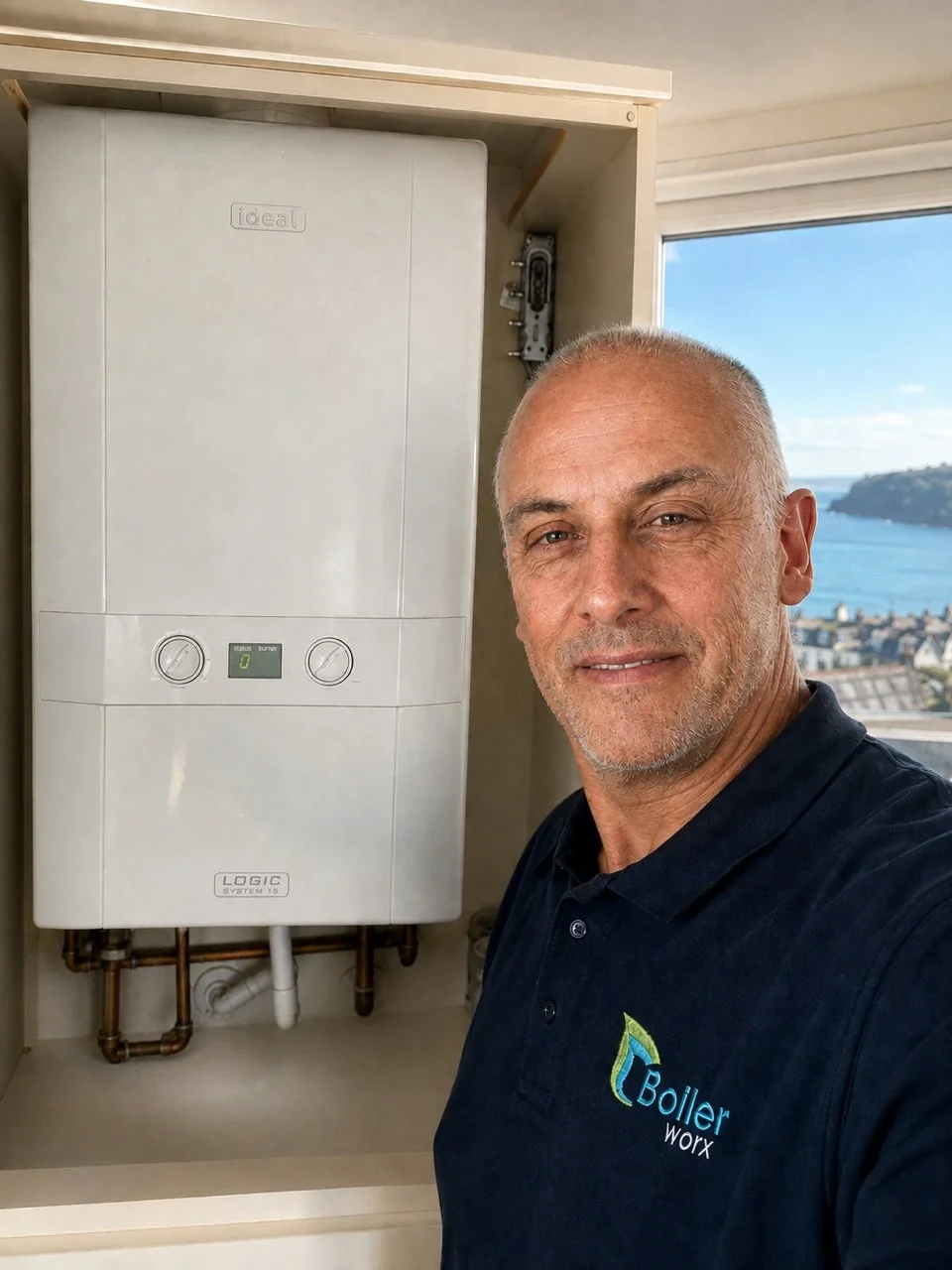
If your central heating is working but you have no hot water, it can be confusing. The boiler is clearly capable of firing and heating your radiators, so why isn't it heating the water from your taps?
This is a fairly common boiler fault and, particularly with a combi boiler, there are several possible causes.
At Boilerworx, I repair and fault-find boilers throughout Torquay, Paignton, Brixham and the surrounding Torbay area. Here are some of the more common reasons I find when a customer has heating but no hot water.
1. Faulty flow turbine or flow sensor
A combi boiler needs to know when you've opened a hot water tap.
Depending on the boiler, a flow turbine, flow sensor or flow switch detects the movement of water and tells the boiler that there is a demand for hot water.
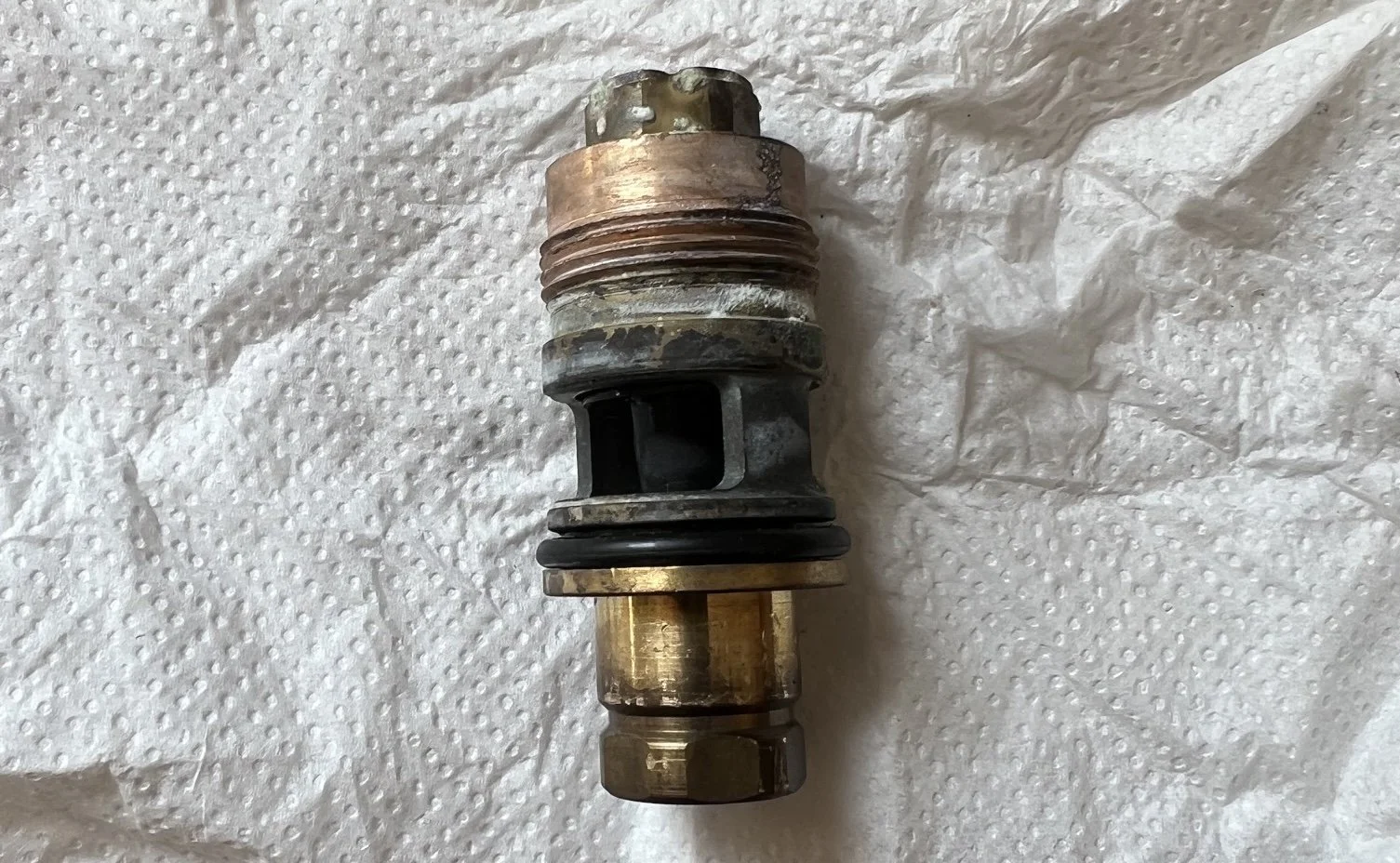
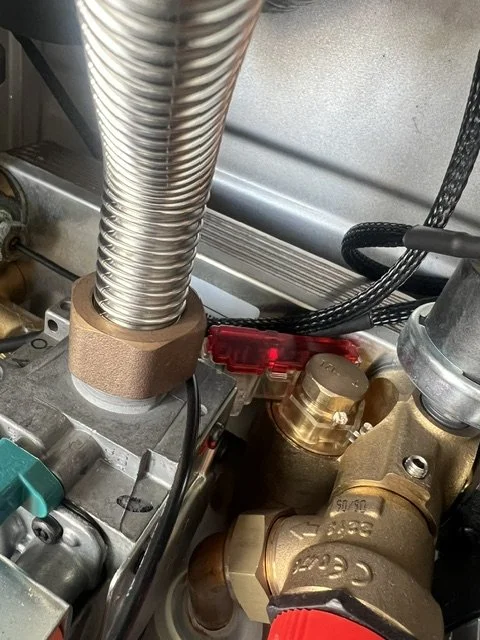
If this component becomes stuck, worn or faulty, the boiler may not recognise that you've opened the tap. Your central heating can continue to work normally, but the boiler doesn't respond when you ask for hot water.
This is one of the faults I regularly find when diagnosing no-hot-water problems on combi boilers.
2. Diverter valve problem
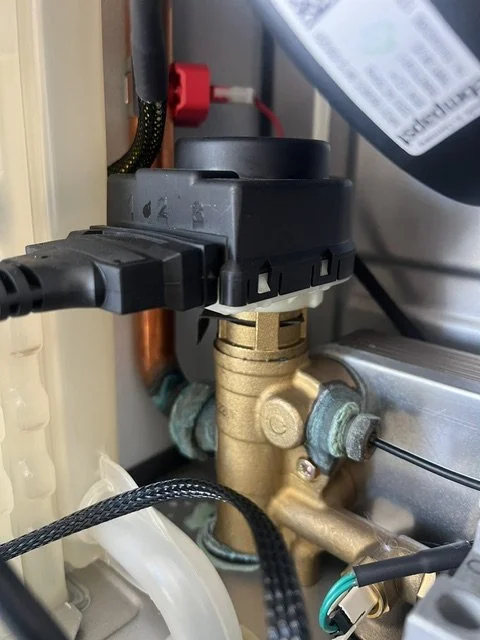
The diverter valve directs heat to either your radiators or your hot water, depending on what you're asking the boiler to do.
As boilers get older, the valve can become stiff, stick or develop a fault.
A faulty diverter valve can produce several symptoms. You might have heating but no hot water, lukewarm water, or even find that radiators start getting warm when you're running a hot tap.
The exact symptoms vary between boilers, so proper diagnosis is important before replacing parts.
3. Plate heat exchanger problems
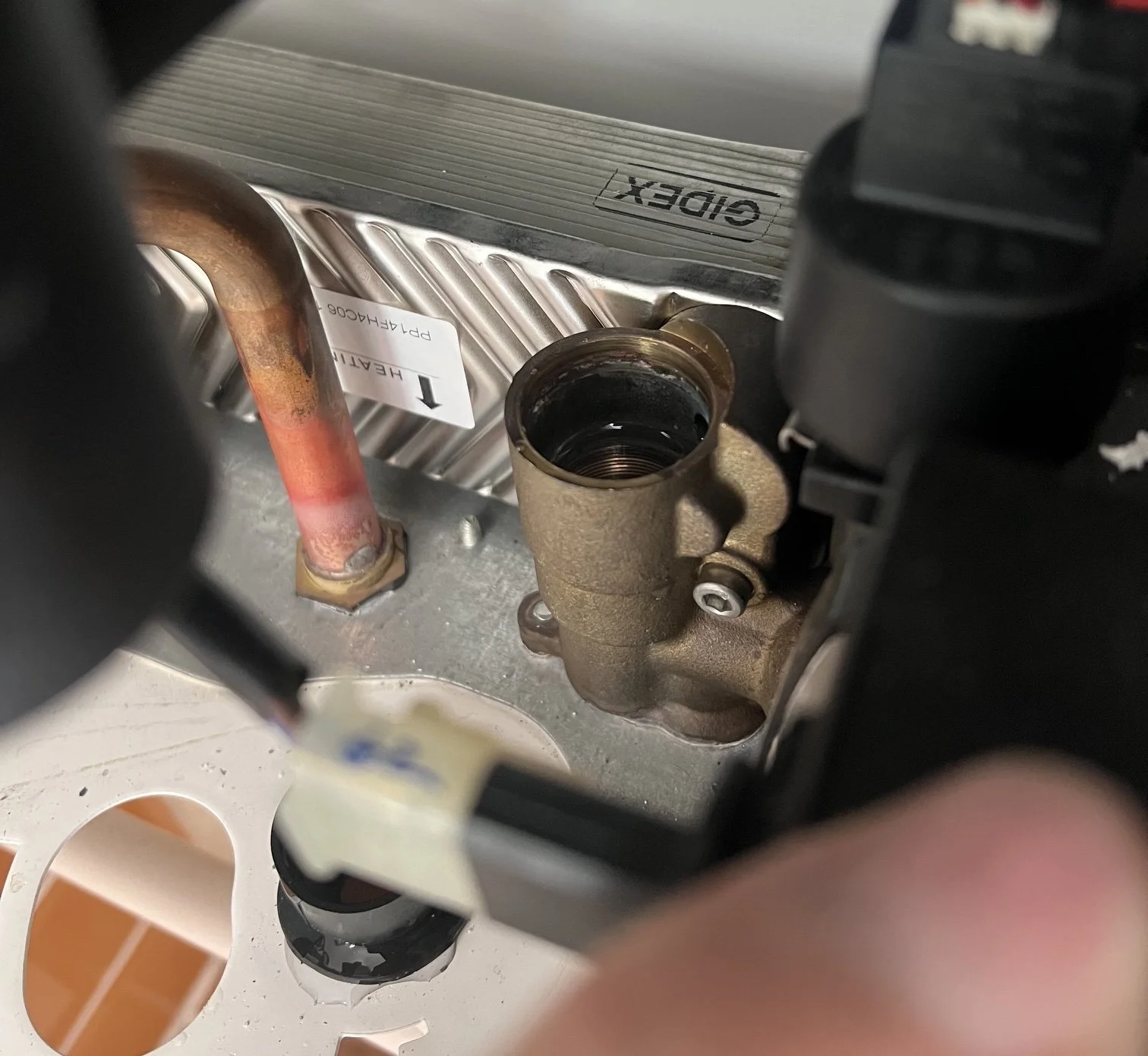
Most combi boilers use a plate heat exchanger to transfer heat from the boiler's primary circuit to the domestic hot water coming from your taps.
Over time, the waterways inside it can become restricted by scale or debris.
This can result in poor hot water performance, fluctuating temperatures or water that doesn't get as hot as it should.
Scale is particularly relevant in hard water areas, while debris within the heating system can also contribute to heat exchanger problems.
4. Temperature sensor fault
Boilers use temperature sensors to monitor the water and control how the appliance operates.
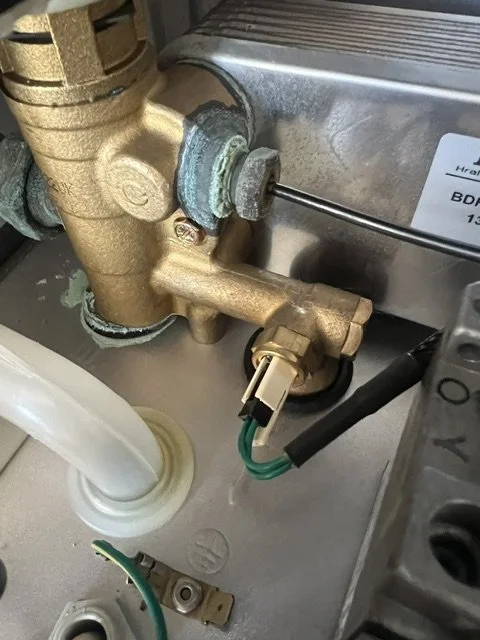
If a sensor isn't providing the correct information, the boiler may behave unexpectedly or fail to produce hot water correctly.
Sometimes a sensor fault will generate an error code, but this isn't always the case.
5. Motor, actuator or internal valve fault
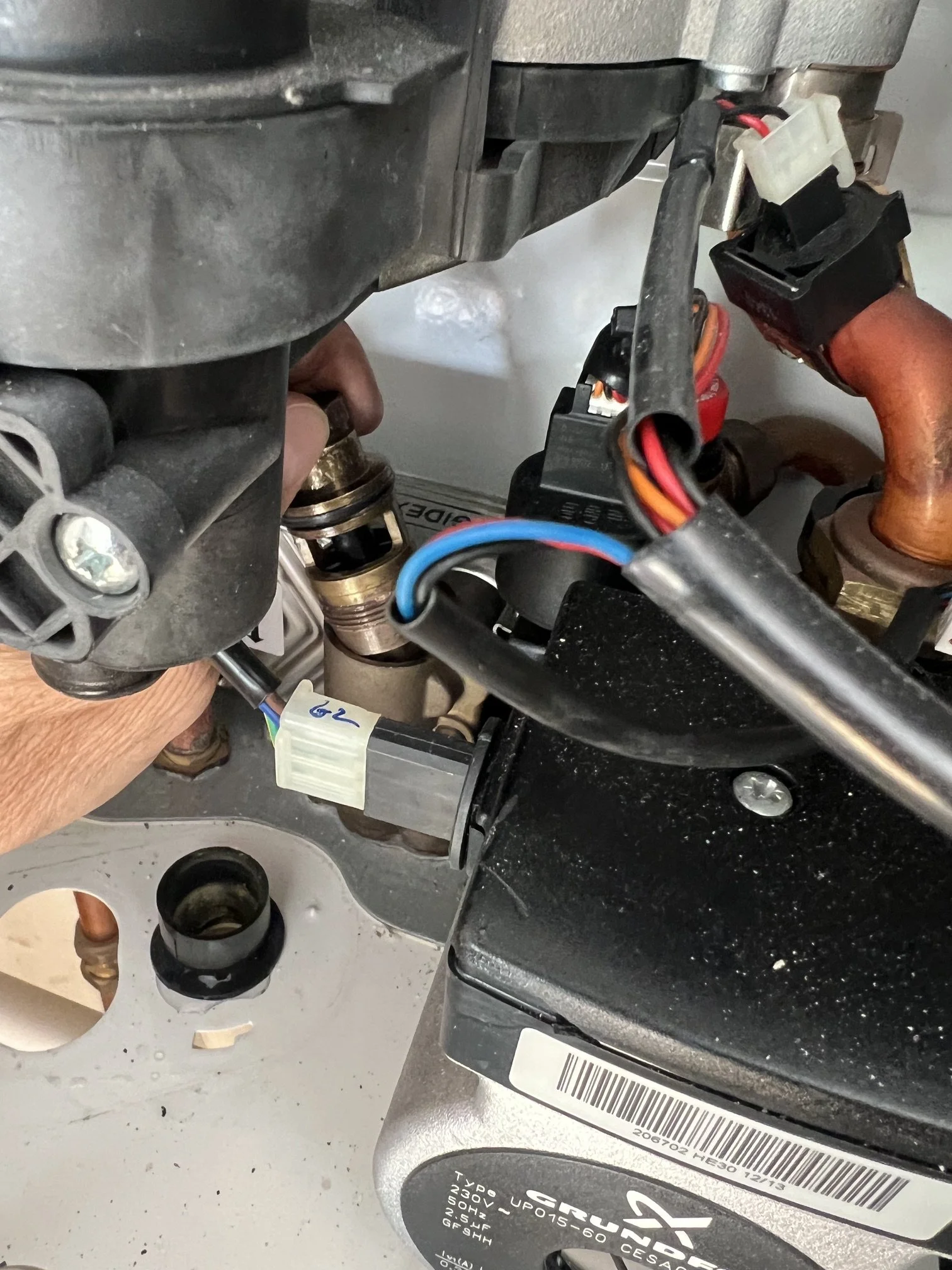
Depending on the make and model of boiler, hot water operation can involve various motors, actuators and internal valves.
If one of these components fails to move into the correct position, the boiler may continue heating your radiators normally while failing to provide hot water.
Again, identifying the actual failed component is important. Similar symptoms can be produced by several different faults.
6. Boiler control or PCB fault
Less commonly, the problem can be traced to the boiler's electronic controls or printed circuit board (PCB).
The PCB receives information from sensors and controls many of the boiler's components. A fault here can therefore produce a wide range of symptoms.
A PCB is generally not something that should be replaced simply because a boiler has no hot water. Other, more common causes should be properly tested first.
What can you check yourself?
Before calling an engineer, there are a few simple checks you can make without removing the boiler casing:
- Check whether the boiler is displaying a fault or error code
- Check that the boiler pressure is within its normal operating range
- Try more than one hot water tap to rule out a problem with an individual tap or shower
- Check whether the boiler reacts at all when you turn a hot tap on
- If your boiler has a user reset function, check the manufacturer's instructions before resetting it
If the problem continues, don't remove the boiler casing or attempt to work on gas-related or internal boiler components yourself. Anything beyond the checks above is a job for a Gas Safe registered engineer.
Does it mean you need a new boiler?
Having working radiators but no hot water doesn't necessarily mean you need a new boiler.
In many cases, the problem can be traced to an individual component and repaired once the fault has been correctly diagnosed. As with most boiler faults, several different components can produce identical symptoms, so the diagnosis matters more than the parts.